Have you ever wondered how companies show changes in what their owners own? The statement of stockholders equity is the financial report that tells this story. It shows how much money the owners have invested, how much profit the company kept, and other important changes over time. Understanding this statement helps people see the company’s health and how it grows.
In this article, we’ll explore everything you need to know about the statement of stockholders equity. We will use easy words and clear examples so anyone, even kids, can understand. Let’s get started!
What is the Statement of Stockholders Equity?
The statement of stockholders equity is a report that shows the changes in a company’s ownership value during a certain period. It tells us how the owners’ shares, profits kept in the company (retained earnings), and other parts like dividends affect the total owner’s equity.
Simply put, it’s like a diary that keeps track of the money owners put in, the money the company earns and saves, and money paid back to owners. It helps investors and managers see if the company is doing well.
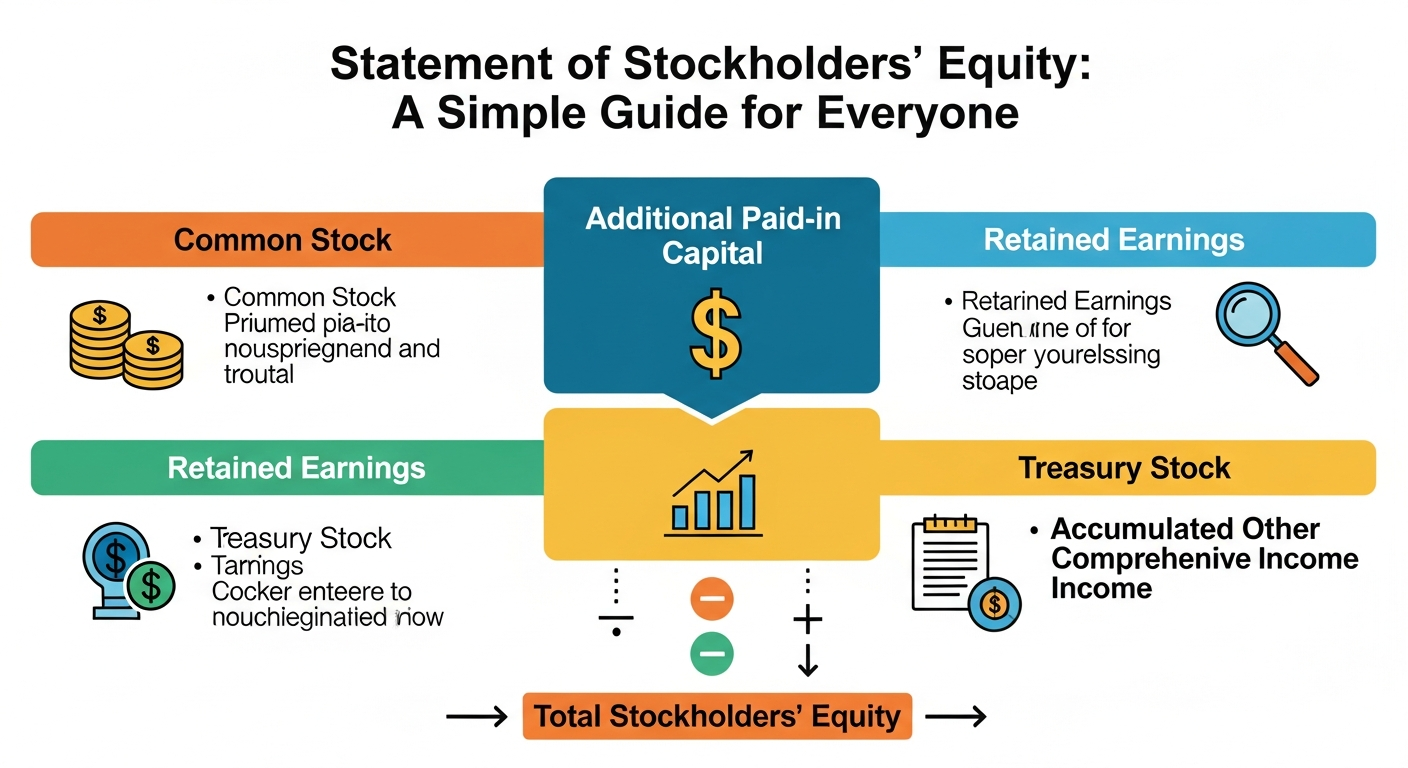
Key Components of the Statement of Stockholders Equity
The statement usually includes:
- Common Stock: The money owners pay to buy shares.
- Additional Paid-in Capital: Extra money owners invest above the share price.
- Retained Earnings: Profits kept in the company for future use.
- Treasury Stock: Shares the company buys back from owners.
- Other Comprehensive Income: Gains or losses not in the profit statement.
Each part tells a story about the company’s financial health.
Why is the Statement Important?
This statement helps investors understand how the company’s value changes. It shows if the company is growing by keeping profits or if it’s giving money back through dividends. Managers use it to plan for future investments or paybacks.
How Does the Statement Connect to the Balance Sheet?
The stockholders’ equity section of the balance sheet shows the total owner’s equity at a single point. The statement of stockholders equity explains how that number changed during the year.
Common Stock vs. Preferred Stock in the Statement
Common stock represents regular owners’ shares. Preferred stock is special stock with priority for dividends. The statement shows how both types affect the total equity.
What Are Retained Earnings?
Retained earnings are the company’s saved profits. Instead of paying all profits as dividends, companies keep some to grow the business. The statement tracks how much is saved or used.
What Are Dividends and Their Effect on Equity?
Dividends are money paid to shareholders as a reward. When dividends are paid, they reduce retained earnings and total equity. The statement shows these changes clearly.
How Does Treasury Stock Impact Stockholders Equity?
When companies buy back their shares, it reduces stockholders equity. Treasury stock is shown as a negative value in the statement because it lowers the total value.
Real-Life Example of Statement of Stockholders Equity
Imagine a lemonade stand owned by three friends. They each put $10 into the business (common stock). The stand earns $30 in profits and keeps $20 for new supplies (retained earnings). They also give $10 as a small thank-you (dividend). The statement will show these changes in the friends’ ownership value.
How to Read the Statement Easily?
Look for changes in common stock, retained earnings, and dividends. Check if equity is growing or shrinking. Growing equity usually means the company is healthy and saving profits.
Tips for Using the Statement in Investing
If you want to invest in a company, this statement helps you know how the company handles profits and investments. It also shows if the company returns money to owners or spends it on growth.
FAQs about Statement of Stockholders Equity
1. What does stockholders equity mean?
Stockholders equity is the ownership value in a company after subtracting debts.
2. How often is the statement prepared?
It is usually prepared every quarter or year with other financial reports.
3. Can stockholders equity be negative?
Yes, if the company has more debts or losses than assets.
4. Why is retained earnings important?
They show how much profit is saved for future growth.
5. What is additional paid-in capital?
It’s the extra money paid by shareholders over the stock’s face value.
6. How do dividends affect stockholders equity?
Dividends reduce retained earnings and overall equity.
Conclusion: Why You Should Care About Statement of Stockholders Equity
Understanding the statement of stockholders equity helps you see how a company’s owner investments and profits change over time. It’s important for investors, managers, and anyone curious about business health. Next time you look at a company’s financial report, you’ll know how to find this important piece of the puzzle.
If you want to learn more about finance or investing, feel free to ask! The statement of stockholders equity is just one step to becoming money-smart.